
From Blank Page to Viral Hook
It was 2 AM, and I was staring at a blinking cursor on a blank Google Doc. My coffee was cold, my deadline was looming, and the “brilliant” YouTube idea I had pitched earlier that day felt anything but brilliant. Sound familiar? AI Tools for YouTube Script
We’ve all been there. That creative wall where ideas dry up and the pressure to post keeps building. For a long time, I resisted using AI for scripting. I worried it would make my content sound generic or robotic. But after hitting burnout for the third time last year, I decided to experiment with AI tools for YouTube script generation.
I was wrong about AI. But not in the way I expected.
The 2026 Creator’s Dilemma: Speed vs. Soul
Here’s what the data says: The global market for AI-generated short-form video scripts exploded from $1.62 billion in 2024 to $2.11 billion in 2025, growing at an incredible 30% year over year. Meanwhile, a recent study found that over 278 AI-driven YouTube channels broke into the top 100 rankings globally in 2025, amassing over 2.2 billion subscribers and generating roughly $117 million in ad revenue.
The numbers don’t lie: AI is no longer a “future” tool for YouTube creators. It’s the present. But does using it mean sacrificing authenticity? Or is it simply the smartest way to work?
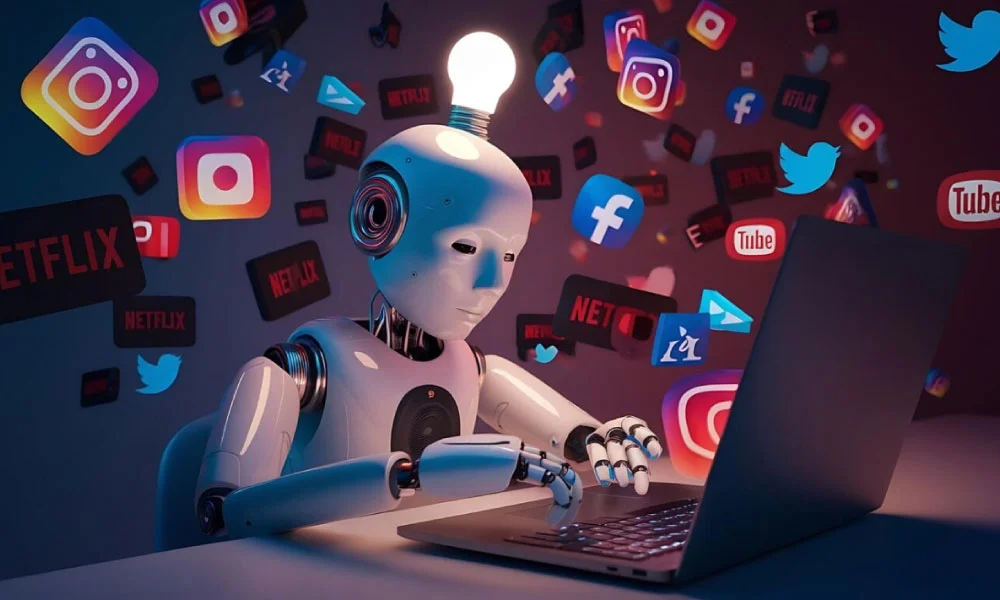
My biggest takeaway? AI isn’t a scriptwriter. It’s the world’s fastest brainstorming partner. The difference between generic content and a banger is still you.
My Testing Ground: How 5 AI Scripting Tools Stack Up
To figure out which tools actually help (and which just add noise), I spent two months stress-testing the most popular AI platforms. My criteria were simple: Could they help me write better hooks, structure engaging stories, and save real time?
Here’s my honest breakdown:
| Tool | Best For | Price Range | My Experience |
|---|---|---|---|
| ChatGPT | Versatile brainstorming, outlines, research | Free / $20/month | The Swiss Army knife. Great for generating hooks and overcoming writer’s block, but you need strong prompting skills to avoid generic outputs. |
| Jasper AI | Polished, SEO-optimized long-form scripts | $49/month+ | The professional. Jasper’s brand voice features and Surfer SEO integration make it excellent for channels that need consistent, searchable content. |
| Copy.ai | Social media, YouTube Shorts scripts | Free / $49/month | The speed demon. With over 90 templates, it’s perfect for quick outputs and repurposing content for Shorts, but it struggles with longer, complex narratives. |
| vidIQ | SEO-driven scripting & topic ideation | Freemium | A hybrid tool. It’s less about full script generation and more about crafting hooks and titles that align with what people are actually searching for right now. |
| Claude (Anthropic) | Natural tone, nuanced storytelling | $20/month | The writer’s writer. Claude consistently produces more natural-sounding dialogue and better tonal control than ChatGPT, making it my top pick for narrative-heavy content. |
The Unexpected Winner: A Hybrid Approach
No single tool dominated every category. But when I paired Claude’s tone for the narrative flow with ChatGPT for fast research and outline generation, the results were consistently stronger. In a head-to-head test for scriptwriting, GPT-5 produced punchy, curiosity-inducing hooks like “One killer YouTube video could completely change your life—here’s the blueprint”, while Claude Sonnet 4 leaned into authority with statements like *”In the last 9 months, I’ve written scripts for 40+ educational channels…”*. Both approaches have merit, but combining them gave me a script that was both provocative and credible.
The “AI-First, Human-Final” Workflow That Saved My Channel
The biggest mistake I see creators make is treating AI like a vending machine: plug in a prompt, grab a script, upload. The result? Soulless content that YouTube’s algorithm sees right through.
Instead, I’ve adopted what I call the “Blueprint & Polish” method:
Phase 1: The Brainstorm (AI as Firestarter)
Instead of opening a blank doc, I open ChatGPT. I prompt: “Give me 10 YouTube hook variations for a video about [your topic]. Use curiosity gaps and pattern interrupts.” Suddenly, I have options. Good options. Options I can remix.
Phase 2: The Architecture (AI as Outliner)
Once I’ve picked a direction, I ask the AI to build a skeleton. A good script has a logical flow, with one idea roughly every 20-30 seconds to maintain pacing. The AI drafts the beats; I fill in the soul.
Phase 3: The Rewrite (You as Editor)
This is the non-negotiable step. I read every AI-generated line out loud. Does it sound like me? Does it feel authentic? I add my personal anecdotes, tweak the humor, and fact-check every claim. AI scripts increase retention when they’re polished, not when they’re raw.
Phase 4: The Repurpose (AI as Recycler)
After I publish the main video, I feed the final script back into Copy.ai or Jasper. Within minutes, I have 5 Twitter threads, 3 Instagram captions, and a LinkedIn post ready to go. That’s where the real time-saving magic happens.
Pro Tip: Always review AI-generated scripts for factual accuracy and brand voice before you produce anything. One wrong statistic can kill your credibility.
Unique Insights: What AI Still Can’t Do (Yet)
Despite the hype, I’ve found three critical areas where AI consistently falls short:
1. The “Inside Joke” Factor
AI doesn’t have your life. It doesn’t know about that embarrassing thing that happened to you last week or the running gag your community loves. Those human moments are what turn viewers into fans.
2. Emotional Nuance
While models like Claude excel at natural dialogue, none of them truly understand sarcasm or the weight of a well-placed pause. The difference between a good script and a great one is often what’s left unsaid.
3. True Originality
AI remixes existing patterns. It’s incredible at combining what works, but it rarely creates something genuinely new. That’s still your job.
The Golden Rules for AI YouTube Scripting
After months of trial and error, here’s what I’ve learned actually works:
- ✅ Be Specific: Tell the AI the exact video duration, target audience, tone (humorous, serious, educational), and platform (YouTube vs. Shorts). Vague prompts = vague scripts.
- ✅ Use the “Dual Script” Method: Generate both a script and a corresponding shot list. It speeds up production dramatically.
- ✅ Optimize for Hooks: The first 5-10 seconds are everything. Use AI to generate 20 different hooks, then pick the best three and blend them.
- ✅ Integrate SEO Naturally: Tools like vidIQ help you identify keywords before you write, ensuring your script is built for discovery from the start.
- ❌ Don’t Publish Raw: An unedited AI script is a faceless video. Always add your unique voice.
- ❌ Don’t Trust It Blindly: AI hallucinates. Verify statistics, dates, and claims before you go on camera.
The Future of YouTube Scripting
The global text-to-video AI market is projected to grow from $362 million in 2025 to over $3.2 billion by 2034. We’re moving toward a world where AI doesn’t just help you write—it helps you storyboard, generate visuals, and even edit based on real-time audience retention data.
But here’s the thing: The creators who win won’t be the ones who automate everything. They’ll be the ones who use AI as a lever to amplify their unique perspective. The tool doesn’t make the artist. The artist makes the tool.
Frequently Asked Questions
Can I use ChatGPT to write my YouTube scripts?
Absolutely. ChatGPT is one of the most popular and accessible AI tools for YouTube script writing. It excels at brainstorming hooks, building outlines, and generating full drafts. Just remember to heavily edit the output to match your personal voice and fact-check all claims.
Are AI-generated YouTube scripts any good?
Yes—but only with human refinement. Raw AI scripts often feel generic or robotic. However, when you use AI as a first draft and then inject your personality, anecdotes, and expertise, the results can be excellent. The magic is in the edit.
Which AI tool is best for YouTube script writing?
It depends on your needs. For budget-friendly versatility, ChatGPT ($20/month) is hard to beat. For professional, SEO-optimized long-form content, Jasper ($49/month) leads the pack. For the most natural, human-like tone, Claude ($20/month) is my personal favorite.
Can AI write scripts for YouTube Shorts?
Yes, many tools excel at short-form scripting. Copy.ai and Writesonic are particularly good at generating fast, hook-driven scripts optimized for the 60-second format.
Will YouTube penalize AI-generated content?
No—as long as the content is high-quality, original, and provides value. YouTube’s policies focus on misleading or spammy content, not the method of creation. Your script must still be authentic and engaging.
How do I make AI scripts sound more human?
Read the script out loud. Remove jargon. Add contractions (“don’t” instead of “do not”). Insert personal stories. Vary sentence length. And most importantly, never publish an unedited AI draft.
Ready to Write Your Best Script Yet?
AI tools for YouTube script writing aren’t about cutting corners. They’re about breaking through creative blocks so you can focus on what really matters: connecting with your audience.
I challenge you to try one of these tools this week. Don’t aim for perfection. Just aim for progress. Generate a hook. Build an outline. Then take that spark and turn it into something only you can create.
What’s the biggest challenge you face when writing YouTube scripts? Drop a comment below—I’d love to hear your experience and share more tips. And if you found this guide helpful, share it with a fellow creator who’s staring at their own blinking cursor at 2 AM.
Read More – Geekafterdark.com